May 222013
 

I’ve been watching, with awe, the sheer marketing genius behind the release of the new Daft Punk album, and wondering what I can learn from it.

There’s been surprisingly little written about the marketing plan, what does exist seems to fit neatly within the meta-PR (PR about PR) genre.  Gearóid Cashman of Harvard PR (no, not that Harvard) notes:

“[T]he biggest story here is the unprecedented level of engagement from the audience – people taking the initiative to use the limited content given to them to create their vision of what it meant to them.”

This made me think a little of the idea of culture jamming – appropriating fragments of culture and reinterpreting them to make sense of the world around us. Very ds106.

More plainly, Brock Clauser of Stream Companies says:

“[T]hey have used older PR tactics to play into our new social world.”

But to me, it’s what they have sold, rather than how they sold it, that is where the genius lies.

Somehow the release of an album has become important, in an era where apparently the single is everything. Even Ian Astbury of the Cult says so.

Somehow a cultural artefact that repays, and indeed demands, sustained and repeated engagement has become popular in an age of “instant gratification and quick fixes”

I wonder for how many people Random Access Memories is their first experience of a complete, realised album as a single experience. It’s certainly been the first time for a long while that I’ve noted stuff like repeated motifs and chord progressions, coherent soundworlds, thematic unity and all the other boring stuff that is why people still listen to the whole of Dark Side of the Moon rather than just the hits.

Daft Punk’s marketing team have sold us the idea of an album as an event. As an experience.

And I wonder if Higher Education needs to come up with a way to do something similar.

I realise I’m on fallow ground drawing an education/music industry parallel. But we are seeing a move towards selling short blasts of “education” as a product, rather than as a longer experience.

And the old widening participation arguments, around encouraging people to try this experience that otherwise wouldn’t consider it, is being nearly eclipsed by this new model.

If we talk about education as a product, as a key to a better salary, then shorter, quicker, less personally affecting means of acquiring it become more popular.

(The pricetag is a red herring here, education still costs the same as it always has, but more of the costs are now visible to the end user rather than being covered invisibly by government support)

I want higher education to be personally affective. I want it to change peoples ideas and outlooks. I want it to expand minds and challenge preconceptions. Which I suspect is another way to say I want it to be messy, difficult, unfashionable and not for everyone.

Who is going to sell a whole course in a market swamped by silly homogenised “tasters”? And how?

PS: … and if “Fragments of Time” isn’t yacht rock I don’t know what is.  Koko’s fire is still burning. Smooth music will never die.

May 192013
 

[note: the Jisc blog already has a response to the UUK publication on MOOCs, which - if it is your first time here - is probably the blog post you are looking for. You can go about your business. Move along. If you actually want to read something coherent about MOOCs try this write up of an RSC Webinar I did last week -  thanks to @hblanchett for the great post which makes me sound far better than I actually was.]

There is a small but growing number of people who flinch whenever they see the word “MOOC” appear on their twitter timeline. I’d put myself amongst their number – I seem to have reached a point of super-saturation which has rendered me unable to to register any emotion other than boredom with the whole topic. This may well be the last MOOC-post on here for a while.

You know what? If you are interested in MOOCs, go and do a MOOC. If you enjoy it, do another one. If you don’t – go and do something else.

There’s various people out there trying to sell you the whole experience as some kind of futuristic panacea, there’s others that are using the panic and disquiet to sell you an online university in a box that will make all the scary go away. (Don’t give either of these groups any money.)

In fact, if you want a one-word write up of the #openandonline event, try “fear”. Fear of being left behind. Fear of being rendered irrelevant.

ZunguZungu puts this better than I ever could.

“Where this urgency comes from, however, might be less important than what it does to our sense of temporality, how experience and talk about the way we we are, right now, in “the MOOC moment.” In the MOOC moment, it seems to me, it’s already too late, always already too late. The world not only will change, but it has changed. In this sense, it isn’t simply that “MOOCs are the future,” or online education is changing how we teach,” in the present tense. Those kinds of platitudes are chokingly omnipresent, but the interesting thing is the fact that the future is already now, that it has already changed how we teach. If you don’t get on the MOOC bandwagon, yesterday, you’ll have already been left behind. The world has already changed. To stop and question that fact is to be already belated, behind the times.”

We should be stopping, pausing, thinking (even pointing and laughing) at stupidity like “MOOC or die”, or even at pressure to “respond” in some way to the agenda.  That we are not says more about our need to cling on to anything that seems to offer a path out of the cultural, social and economic morass we find ourselves in.

A “MOOC” is not massive, open, online or a course. It is a MacGuffin. It is a big friendly reset button. It is a magical device that retcons the failed digital education revolution of 1999/2000, and ignores all of the many things we have learned since.

It works because we get to have the shiny future without acknowledging the 10+ years of tedious actual work (both technical and conceptual) that underpins it, and the further 10+ years of work need to get it to a stage where it is actually of use to someone.

The MOOC as it currently stands is a flawed vision of the near future. And we don’t need to buy into every prophecy or panic that surrounds it.


May 142013
 

There’s a new iteration of ds106 on offer. Following on from the sterling work of the Cogdog, the Bava has decided to have another crack at the only large scale free course I would recommend to everyone.

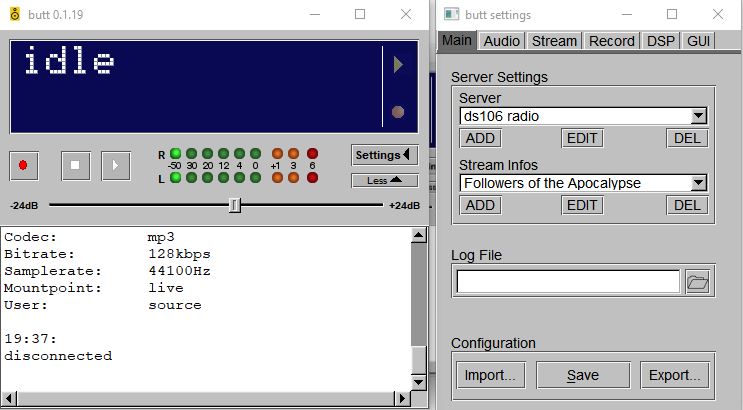
This is what an online course could be, if it was done by humans.  And this is a very rough demo of what it might sound like.


Apols to Daft Punk

Apols to Daft Punk (click to see animated)

(note: some people are showing worrying signs of taking Followers of the Apocalypse seriously… this is a special post just for them. Policy analysis and moocmongery is all very well – sometimes you have to make art, dammit)

May 062013
 

I know no one was expecting me to, but I was really looking forward to Coursera’s “Introduction to Improvisation” (Gary Burton, Berklee). I’d really hoped I’d not have to be writing this kind of post – I genuinely wanted to improve my musicianship and, though I don’t quite come from the same tradition as Gary Burton, I have a lot of respect for what he does.

To prove that I ain’t no lazy drive-by drop-out, here’s my recording of Lesson One: Assignment One. That’s me on hammond organ, the rhythm section (piano, bass, drums) is from the Coursera-provided backing track. (the closing chorus demonstrates why I’ll never get a gig in a posh hotel…)

The challenge was to improvise over an arrangement of a jazz standard, “What is this thing called love?” (Cole Porter, 1929)*. Like many jazz standards it is an old show tune, and – in the right hands – a very beautiful one. For example, Ella Fitzgerald does a very straightforward version at a slower tempo. She neatly illustrates the “form” of a jazz standard in starting off by stating the tune, then including a bit of improvisation, then back to the tune.

In instrumental jazz it is generally taken a fair bit faster (for example, The Bill Evans Trio), but it has the same overall shape. The Bill Evans version starts with a very quick statement of the tune on the piano, leading into a much longer improvisation that departs much further from the tune and incorporates all three instrumentalists. But they arrive back at the original theme at 3:55.

You’re probably wondering where the tune was in my version – the answer is that we were never told about the tune or even that it *was* a jazz standard. So whereas Evans can use the tune, or previous interpretations of the tune, as a starting point for doing something else, we were not given that option.

What I mean by using the tune is taking clues from the shape and form to provide inspiration for the stuff I play afterwards. For instance, the tune repeats the first bit (we call it the A section) twice, then does another bit (the B section) and then goes back to the A section. In the A section the notes of the melody are all grouped fairly close together, where as there is a big leap up to higher notes for the B section. And there is a rhythmic motif (DAA-da-da-da, DAAAAA-DAAA) to the melody that repeats, and also serves to anchor where the chord changes go. Listen to the Ella version again and you’ll hear it. (non-musicians: you will, trust me)

There are as many ways to improvise as there are improvisers, and to his credit Gary Burton did try to leave this assignment wide open to allow for this. But some of his assumptions about improvisation did permeate.**

In assignment two we were asked to analyse a solo he had taken over the same song – but large hints were dropped that we were expected to place what he was playing in terms of the harmonic relationship to the underlying harmony (we had a chord chart and a transcription to help us). But this kind of analysis ignores two things:

  • any rhythm section worth it’s salt will be mucking about with the harmony underneath the top-line improvisation. They will be following it, adapting to it, echoing it or even steering it by their choices of notes and rhythms. So the underlying harmony is not, and never should be, entirely static.
  • If you are choosing a scale for every chord you will (unless you are super-amazing at jazz) be creating a solo that doesn’t tell a story, that doesn’t really flow. It will be lots of tiny, quite likely very interesting, bits that don’t really fit together. And really annoying your rhythm section who are trying to follow you and contribute musically to what you are playing.

To branch into a non-musical metaphor, it’s like the difference between learning phonics and learning to read. Phonics (letters and group sounds) are tools to allow you to analyse words to figure out how to say them. But if you can work out the word from the context you have read it in, you don’t need phonics and they will simply slow your reading down.

We were given a harmonic progression shorn of contextual clues, and then encouraged to break down any remaining context by treating each point in the implied harmony as an individual world in itself. This is a great impetus to want to learn chords and scales (“what scale do I use over a Dm7 b5??” comes the cry from the forums) but it is not – in my reckoning – a good way to actually learn anything about improvisation.

You could take the “correct” scale for each chord and zoom up and down it really fast all the way through the piece. But it would sound horrible, because it wouldn’t be telling a story, and it wouldn’t be possible to join in and add to the story.

In this way, it highlighted a limitation of xMOOC pedagogy in that by addressing students in isolation, there is little opportunity to co-create narrative or respond to each other. If you treat each learner as playing in isolation you produce a generation of musicians that know every scale for every chord, but don’t know how to listen, react and contribute

Stuff like DS106 (especially) and Phonar do this brilliantly. For both there is a huge range of tools and approaches that could be employed to tell stories, but the emphasis is on the telling of the story and the story is told by many voices.

“What is this thing called MOOC?
This funny thing called MOOC?
Just who can see a pedagogy?
Why should it make a fool of me?

I tried a MOOC, one wonderful day
It took my try and threw it away
That’s why I ask the Lord in Heaven above
What is this thing called MOOC?”

(and @dmuviv records the vocals in her best ‘Ella’ voice…)

* Amber Thomas will know it as the tune from that bit in “Fifty Shades Darker” where Christian and Ana arrive at Le Picotin.

** Other Courserians (born under the sign of Courserius?) complained of an over-emphasis on written music, and a focus on top-line as opposed to rhythm instruments.

Apr 192013
 

“We do not influence the course of events by persuading people that we are right when we make what they regard as radical proposals. Rather, we exert influence by keeping options available when something has to be done at a time of crisis” Milton Friedman, “Two Lucky People” (1998) quoted by Dougald Hine in “The End of the University as we know it?” (27 Jan 2011)

I’ll admit I was startled when Dougald, whom I know via his work with Dark Mountain (and in an unlikely series of coincidences, briefly played in a band with on Teesside in the early 90s) announced his intention to quote favourably from neo-liberal pin-up Milton Friedman. But when he shared the quote with me, I immediately understood why.

It is a beautiful encapsulation of the nature of resistance to orthodoxy, at the very basic level of ensuring that an alternative to the orthodoxy remains within – as a undertone – the ongoing public discussion. Where an idea seems to prevail, Friedman’s counsel suggests that an all-out attack on the idea is not as effective as something more subtle.

I was reminded of this as I read (at the recommendation of Mark Johnson) Roland Bartlett’s “Imagining the University” (Routledge 2013). I heard echoes in passages such as:

“What is striking about [the] conceptual journey that the idea of the university has undergone – over nearly one thousand years – is that it has gradually shrunk. Whereas the metaphysical university was associated with the largest themes of humanities self-understanding and relationships with the world, the idea of the university has increasingly – and now especially in its entrepreneurial and corporate incarnations – closed in. The entrepreneurial university is expected to fend for itself, and attend to its potential impact on particular segments of the economy, and become distinctive. This university has abandoned any pretence to be associated with universal themes.” (p2)

The shrinkage of the idea of the university, most notable in the past 30 years, has led to the framing of all possible discourses around the university in terms of “impact” and “viability”. Even the alternatives to Bartlett’s “entrepreneurial” university are assessed in terms of their impact – in terms of what immediate and tangible benefit that they can offer – even as (again in Bartlett’s arresting words) “feasible utopias”.

In Christopher Grey’s wonderful account of the organisational structure of Bletchley Park (something with I continually refer to with joy) he illustrates wonderfully the idea of an idea enclosing and defining a discourse:

“In a similar way [a] history of the Home Guard notes that it proved impossible to write that history without extensive reference to the popular television comedy ‘Dad’s Army‘ because this had so heavily inflected cultural memory and understanding of the topic. This is a very particular and perhaps extreme example, but it is illustrative of the more general significance of the interpretation and re-interpretation of the war in subsequent decades” (pp116-117)

Once you have defined the terms of the debate, it is difficult to avoid dominating it. Culture is riven with such shibboleths, commonplace interpretations and references. And it is these, far more than the facts of any given field, that dominate it.

The stories we tell are far more important that any mere facts, and the stories we contribute to need to be treated as narratives to which richness and delight must be added rather than fictions to be quashed.

In the UK, we’ve just lived through a concerted and deliberate attempt to  define Margaret Thatcher as a universally admired national hero. At first the long-witheld joy (and yes, it feels wrong to define it as joy, so successful has been the narrative engineering) felt by so many who have struggled so long against everything she and her ideology stood for was quashed by an instruction to think of the feelings of her family (respectively a fraud who attempted to destabilise a sovereign state and a quasi-celebrity racist). Then, after an unprecedented 7 hours of Parliamentary eulogies (Churchill, an equally fishy and divisive character – who argued against universal suffrage, lest we forget – was only afforded 40 minutes) we were told it was not a time for party political point-scoring!

The lasting effects of the resistance to this will not be the protests at the cortege or the street party in Glasgow, it will be the open and public commentary of thousands of ordinary people – on social media and to each other. Our Mass Observation project will be soliciting diaries on 12th May 2013 – I can only urge people who care to write about Thatcher and what they felt at her passing. The recently released (JISC-funded, no less!) archives from the 80s are equally illuminating as a definition of a serious and politically active 80s light-years away from yuppies and electro-pop.

An owned discursive space is a striated and predefined space, where even resistance is a codified reinforcement of the dominant position. The “riots” against Thatcher became a part of her canonisation by the British establishment – a signifier that those who opposed her opposed all forms of public decency and order. Thinking again about the narratives of the future of the universities, Bartlett suggests:

“Is not academic  life across the world increasingly striated [after Deleuze and Guattari] , with severe limits placed upon it and entreated to run its course in certain directions. [...] “No nomadism here” might be the sign over the university’s entrance.” (P103)

A long way from the Abbey at Thélème! Rabelais inscribed the rather more permissive “Do What Thou Wilt” as the one abiding rule governing the intellectual and pleasurable pursuits of his novitiates.  And Newman, in his “Idea of the University” suggested

“An assemblage of learned men, zealous for their own sciences, and rivals of each other, are brought, by familiar intercourse and for the sake of intellectual peace, to adjust together the claims and relations of their respective subjects of investigation. They learn to respect, to consult, to aid each other. Thus is created a pure and clear atmosphere of thought, which the student also breathes, though in his own case he only pursues a few sciences out of the multitude. He profits by an intellectual tradition, which is independent of particular teachers, which guides him in his choice of subjects, and duly interprets for him those which he chooses. He apprehends the great outlines of knowledge, the principles on which it rests, the scale of its parts, its lights and its shades, its great points and its little, as he otherwise cannot apprehend them. Hence it is that his education is called “Liberal.” (Discourse 5)

Newman saw knowledge holistically as a set of narratives that intermeshed – there were none of the constraining striations that Bartlett warns against. Any attempt to limit this “Liberal” education would lessen its impact. And the striations do limit the impact of what universities are doing and are able to conceive doing.

My “feasible utopia” would be an unconstrained, Newman-esque academy. But I’m not quite naive enough to think that going around demanding one is going to get me any way towards it actually existing.

I’ve not been using all these scholarly references to show off how smart, or how widely read, I am. I’ve been using them because they are a helpful way of structuring and scaffolding an argument I am building. The argument I am building is that resistance, that critique, that just preserving the idea of another way, is valuable in itself. I’m able to build it because I am lucky enough to have had the chance to exist and grow, briefly, in an unstriated space and to have been astute enough to recognise this at the time.

To even recognise the critical basis of an attack on the university as unsustainable and unviable is to empower the attack. A final point from Bartlett:

“[In] an instrumental age, any serious exercise of the imagination has to face the jibe ‘But you are not living in the real world’. The proponents of this view fail, of course, to recognise that their reference to the “real world” is question-begging, for what is to count as “the real world”? Is “the real world” the contemporary world, with its gross inequalities, its distruction of the natural environment, its diminishing of the humanities (as it gives the highest marks to the sciences and science and mathematics-based technologies and its valuing of higher education only insofar as higher education yields a return in the knowledge economy? The imagination, in other words, may be working to bring about a different “real world” (p31)

If you accept the premis that an alternative has to be grounded in the “real world”, you’ve lost. Those arguing for the “entrepreneurial university” and the like are arguing – as Baudrillard put it “neither in a logic of war, nor a logic of peace, but a logic of deterrence.” Later, he continues “We are no longer in the logic of the passage from virtual to actual but in a hyperreal logic of the deterrence of the real by the virtual”.

This idea of the “real world”, as I’ve gone over again and again on these posts, is a pointillist idea that does not bear close inspection. The people arguing that we must take account of the reality do not live in it, because it simply does not exist.

And I may perhaps be excused for not building my arguments on the meagre and constrained dreams of our ruling class. And I may instead work on substituting, artfully and subtly, our dreams for theirs in the collective reinterpretation of our lived history.

“I decided I wasn’t coming here again.I went to the pub.’They were all singing, all of ‘em.[...] ‘oh, some song they’d learned from the jukebox.’And I thought, “Just what the frig am I trying to do? Why don’t I just pack it in, stay here and join in with the singin’?” [...] I did join in the singing, but when I turned around,me mother had stopped singin’, and she was cryin’.I said, “Why are you crying, Mother?” And she said, “There must be better songs to sing than this.” And I thought, “Yeah, that’s what I’m trying to do, isn’t it?” Sing a better song.” (Educating Rita)


Apr 142013
 

So Downes (and via Downes, Jim Groom) are hankering after the “subversive” roots of a MOOC movement that currently feels as edgy and relevent (and as exploitative and dull) as Starbucks. Reminding us that the original gameplan was to shake up those nasty elite institutions and bring new (and non-broken) education to the delighted and grateful masses.

Which might be true. In North America.

Some of us live in countries where Higher Education was free to those who could benefit, in living memory for someone in their mid 30s.

Here in the currently free nation of the United Kingdom (to give one example), the corporate hype behind MOOCs looks (and smells) the same as the hype that is pushing us to build a system just like the one that spat you out. The original wave of MOOCs (your connectivism stuff… well the ideas at least) felt like a reconnection with the earlier ideas of a system that could offer education to all. They felt like the tradition of university outreach and public lectures that have informed the UK system since before America. As in, before the European discovery of America.

We see the outsourcing of key activities, the enroaching managerialism, the flashy marketing that our institutions are beginning to undertake as just another wing of the ideology that brings us Udacity and Coursera. Maybe because other universities in other countries sold out so long ago it is easier for us to see.

What we had – what I benefited so much from – in the 80s and 90s has been under sustained attack ever since, by a shared ideology surmising that this education lark would be a nice little earner with a few little tweaks here and there. Every reform since then has been about making it easier to funnel government and student money to the private sector. Student experience is getting worse. Staff experience is getting worse. But that is not the point, it seems.

And when we see these VC-backed ex-academics, telling us that in 15 years there will be five institutions of higher education left, when we see journalists and analysts jumping on an easy answer that does away with academia almost entirely, when we see the very notion of “superstar lecturers” being taken seriously – we see the completion of this cycle.

It is easy to fall into the trap of assuming that your bad experience makes the system worthless. Your bad experience sucks – this is both true and lamentable – but it doesn’t make the system wrong. It makes the influences and ideas that are slowly colonising the system a great risk that allows the same experience to be repeated again and again. This is modern neo-liberal education policy writ large – my experience was unsatisfactory, therefore the system is unsatisfactory, therefore the attractive shiny and hyped to the gills idea that is suddenly everywhere is the future. And education is fucking broken. Yes.

Modern-day universities suck. But why they suck has more to do with the same people that are selling us the new model than the people who are trying to maintain the old one.

Work needs to be done. But I am unable to agree that the answer lies in trying to subvert what already exists, because there is already an entire industry that has been trying to do that for 20 years, and they have already succeeded in destroying a lot of what was great about the old system. When we see academic conditions fall again and again, when we see new PhDs earning less than they would tending bar, when we see learners treated like numbers, we know that it could be better because in living memory it has been better. Maybe it is our memories we need to share with you.

Even the Death Star had a library. It was on Deck 106.

Apr 102013
 

It was with much fanfare that xMOOC big-beast Coursera announced that it has turned a small annual income, equivalent to a little over £140k, from its own activities. This represents the first gleanings of a return on venture capital estimated at around £10.4m ($16m) over one year of operation.

However, Coursera also claimed an enrollment of 3.2m students worldwide, putting it at a similar size to the entire UK HE system. It was with this in mind I started on the partially insane task of doing a direct comparison of the two systems for investment purposes.

Throughput

The primary business of both systems is deliver courses (deliniated units of learning) to students. UK HE claims just under 2.5m students – lower than the 3.2m students claimed by Coursera – but boasts a drop-out rate of just 7.4% (giving a total of 2,311,893 course completions). On the other hand, the drop out rate of Coursera is estimated at 95%, suggesting that around 160,000 students are successfully taught to the completion of a course of study.

These successful Coursera students are spread across 313 courses, which compares with 51,116 courses offered by UK HE. It is also worth noting that the average “course” of study in UK HE is three years in duration and leads to an internationally valued qualification. In comparison, Coursera offers courses lasting around 6 weeks, which do not currently lead to any recognised qualification.

The primary difference is in cost – Coursera offerings are largely free, whereas UK HE can charge up to £27,000 for a three year course (though this is paid via a government backed loan). The huge price differential (coupled with differences in the nature of the courses) suggests that there is little, if any, market overlap – despite many inflated claims about Coursera in the press.

Profitability

UK HE ran an operating surplus of £1.1bn in the year 2013, most likely down to a non-core income of £2.9bn from businesses and charities. This is based on a total income of £27.8bn from all sources, including students and government.

As discussed above, Coursera achieved £143,743 of total operating income outside of venture capital injections. For the purposes of this comparison we will call it an operating surplus, even though it does not take into account the return on investment expected by existing venture capital contributors.

UKHE  therefore makes an operating surplus of £481.78 per successful student, compared to 90 pence per successful Coursera student.

ppcs

Product quality

Assessing the quality of higher-level learning often uses a staff:student ratio as a proxy for quality, drawing on decades of research. In employing 181,385 academic staff, UK HE can offer one educator per 14 students.

In examining the Coursera staff list, I was able to identify two (2) members of staff that I would consider to be academics – Prof Ng and Prof Koeller. This offers a slighly less impressive 1 to 1.6m staff:student ratio.

UK HE is ranked highly by many global university rankings. Indeed, it contributes 11 courses to Coursera (which is famously selective concerning contributing institutions).

Product diversity

Coursera has begun to move into paid learning certification, and has partnered with ProctorU to provide paid proctored examinations which may lead to university credit. Income streams are limited to the purchase of additional premium services by students. But its primary assets are a bespoke teaching platform and the range of user data generated by its students (the latter may be monetised by selling to future employers, though this is not yet a proven market)

UK HE offers a huge range of courses at undergraduate, postgraduate, pre-university and professional development levels – both on and offline, along with a range of free courses aimed at community outreach. It has a substantial estate, which is used to generate income via event hosting and management, and is also active in research and development – winning contracts from private and government sources. Primary income is from tuition, and numbers and investment remain steady despite recent funding method changes.

Return on investment

On the basis of the figures presented above, for every pound of the operating surplus generated by UK HE, £25 has been invested (primarily by government)

For every pound of the operating surplus generated by Coursera, £73 has been invested (primarily by venture capital, who will be seeking a return on their investment). It is notable that Coursera must also return a percentage of any profit to institutional partners, as compensation for their investement of brand goodwill and staff time.

Other analyses

Financial ratings agency Moody’s has recently downgraded the ratings of two UK universities (De Montfort and Keele) to Aa2, in line with their recent downgrade of the UK more generally. A third, Cambridge, maintains a triple-a rating. Despite this, the UK HE sector is clearly percieved as investment-worthy by Moody’s – concerns are related to the activities of the current UK government rather than any failings within the sector itself.

Coursera has not been rated by Moody’s as it has not issued – and is unable to issue – any bonds. It would be unable to raise money via this means as it has an insufficient credit history.

Venture Capital Analyst Sramana Mitra notes:

“What worries me about Coursera is that a high-growth business model has not emerged yet. How long will VCs continue to support the business under those circumstances?”

Conclusion

I stand shoulder-to-shoulder with David Cameron (did I just write that?) and the rest of the UK government when I conclude that the UK HE sector represents a far better investment in this market. It is more efficient at providing courses of education – providing a wealth of diversity and choice, and an industry standard accreditation product. It also has a greater diversity of income streams, and has shown long-term sustainability.

By comparison, Coursera appears to have significant issues with the viability of its core product. Student attrition rates suggest that although their courses are initially attractive, they have very limited long term appeal. Attempts to generate further income have centred on enticing completing students to pay for premium services rather than improving their core offer. I would see Coursera as a very high-risk investment, and one that already has a number of prior investors (financial and in kind) with a call on any ongoing profit.

I need hardly add that anyone taking investment advice from Followers of the Apocalypse probably needs to have a chat with a grown up first.

Mar 302013
 

SOMEBODY!

Increasingly, MOOCs seem like buses to me. Not because I wait for ages and then three million all turn up at once (though you can see why I might think it), but because they seem to be drawing us in to the first stages of the Higher Education Bus Wars.

Before the 26th October 1986, (when I was 8 and lived quite near Darlington) each local council in the UK ran its own bus service. Which you might think would be sensible, as it meant they could design services around local needs rather than profitability.

Alas the logic of the market prevails, with the 1985 Transport Act allowing pretty much anyone with a bus to start whatever-the-hell kind of commercial service they liked providing they gave 56 days notice.

This ushered in a glorious new era for the UK bus user.

What actually happened was that local councils had to spin off and sell their own bus services, which were largely bid for by the same five large companies. It was in their interest to reduce the value of these existing services, so they could buy the local company more cheaply or demolish it entirely to bring in their own services.

So to start with, residents saw loads more buses about the place. These new buses ran the same routes as the existing buses people were used to, but charged a fraction of the price (or were in some cases entirely free).

And who could be against cheap (or free) bus travel?

But eventually, the loss-making buses made the others on the route unviable. And then, with a monopoly in place, those prices rose sharply to the absolute maximum the market would bear. Local and smaller companies went to the wall.

The big five (Arriva, First, GoAhead, National Express, Stagecoach) then effectively carved up the country between them, with sporadic and limited local competition easily quashed. Prices rose sharply, passenger numbers fell and services outside of the profitable routes largely disappeared.

The problem was that local transport is basically a guaranteed income. People aren’t just going to stop needing to get around, and governments (even the right-wing fantasy ones) pretty much know that if you can’t move people between minimum wage jobs, expensive rented accommodation and shopping centres then the economy is stuffed. So there is money to be made, and a system has been designed that favours money making ability over actual ability to provide a service.

In the same way, no government is likely to stop supporting education. Even people who are solely concerned with making money admit that people need education. And that they can profit from both the results (educated people) and the process.

Now read the above again, but imagine that these new bus companies had somehow convinced existing and experienced bus drivers to drive their new, enormous and unwieldy vehicles (from which 90% of passengers fell and injured themselves on each journey) without wages.

And that these new buses were plastered in the logos of the old, trusted bus companies (who even paid for the privilege) , and accompanied by acres of uncritical news coverage and dubious quality testimonials about how a single free low-quality bus journey had changed peoples lives.

And that people tried to make existing companies feel old-fashioned for not having these new buses that were free to all passengers, even though the more experienced companies knew that it was a far worse service and completely unsustainable.

And that these new services were backed by limitless money, from huge publishers and venture capital, whilst existing services were squeezed again and again by their own funders.

Imagine.

Bonus video about bus wars in the south of england  from 1986 local TV.


Mar 222013
 

It was Paul Kingsnorth (poet, scythe-mower, recovering “green”) and Pope Francis 1 (pontif, misogynist, Argentinian) who between them set this particular hare running. Paul (you might know him as the co-founder of Dark Mountain) was noting on twitter with evident glee the frustration of the massed press in St Peter’s Square, being offered nothing to report on but the occasional puff of coloured smoke.

A bored and restless press was kept waiting by a seriously “closed” process, and responded with irreverence and irritability. For once, the news wasn’t moving to the tempo they were used to.

But the news didn’t always move at that speed.

Here’s the first paragraph of a Time magazine article on the papal coronation in October 1978 (there’s more behind a paywall). This article represents the entire coverage of Time concerning the conclave. It is thoughtful, resonant, conveying more of a sense of the occasion than this entire Daily Mail article on the 2005 conclave, which though short and poorly written, at least captures the main points in a comprehensible manner.

Compare the Metro’s “live blog” from the Vatican City. Or any one of the millions of other articles from the day, from bloggers, journalists, analysts and columists – from canon law experts and militant atheists. Even from an advocate for livetweeting from within the conclave.

I’m not sure that this is the fault of the news industry, or the fault of our constant access to “new media”. These are the things that get blamed for a lack of detailed comprehension, for a disengagement with the news and for a focus on trivialities rather than that great cliché, the “real issues that hard-working families are concerned with”.

Me – I blame policy making.

A while ago former government wonk Damien McBride wrote a lovely eye-opener of a blog post about “The Grid“. This was the UK government’s media management toolkit from 1997-2010.

“The ‘grid system’ initiated by New Labour – transferred from their 1997 election campaign – is commonly considered to be a news management tool, with a series of announcements plotted to dominate each day’s coverage and provide occasional cover to bury bad news”

The key word is “dominate” – the idea was to super-saturate the news ecosystem with controlled news items. The idea of “burying bad news” was taken to extremes by another government advisor of the day, Jo Moore, who suggested that the 11th September 2011 was a good time to release stories that were unlikely to offer the government flattering coverage.  This scandal led to perhaps the greatest modern political quote, which I repeat with unbridled delight, from Permanent Secretary Sir Richard Mottram:

We’re all fucked. I’m fucked. You’re fucked. The whole department is fucked. It’s the biggest cock-up ever. We’re all completely fucked.”

This is not the language of someone making good public policy. This is the language of panic.

To dominate a media that is skilled in identifying and disseminating key news angles government press officers attempt to overfeed journalists. The thinking appears to be that if you continually keep them reacting to events instantly, there will be no time for any analysis of the implications of the announcements in question – either taken singularly or culminatively.

Jeremy Porter, the editor of the “journalistics” blog, estimated in 2009 that around 4,000 press releases – from government, industry and pressure groups – were sent out every single day.

I’ve worked in policy for most of my working life, so I see the other end as well – desperate, quick, attention-grabbing initiatives that make little or no sense given the wider swathes of policy history in a particular area.

Neither policy making nor policy analysis has any sense of history, despite the sterling work of blogs like Public Policy and the Past, and initiatives like the KCL/London “History & Policy” pages. In a way the system is such that there is deliberately no time for this indulgence.

And the increasingly hysterical attitudes of lobbyists and pressure groups, setting arbitrary targets before some great cataclysm occurs – campaigning for immediate action on some newspaper-fed flash fire of public concern – is little help to this. Knee-jerk policy is not a victory for a campaign… it is bad policy that unravels over the following weeks and months.

Slow policy would start with a fallow period – a fast – by both sides. An end to all policy announcements. For at least 12 months. This time would be used to commission and conduct, in public, proper research on the problems people face.

From policy makers, this would require a retreat from their fear of deep public analysis and their need to make headlines. And from commentators, a retreat from the need to reduce every policy decision to an act of political warfare. And from all of us, from the idea that everything requires immediate action.

Watching the smoke might be the best thing that every happened to public policy.

 [postscript: I've just been worrying that it is nearly a week since the conclave, and that I'm too late with this post... none of us are immune]


Mar 112013
 

An avalanche is coming. An avalanche of nonsense.

This is not our language, which is fair – which is correct –  because this is not written for us. This is written for the kind of people who are impressed by such language.

This is written for people who would not bat an eyelid that the formerly respectable IPPR are now publishing paid advertorials from Pearson.

One of the facets of this new discourse of “disruption” is the use of vaguely connected anecdotes to illustrate a point. Pearson run a college in the UK, who are imaginatively called Pearson College – leveraging their reputation for value for money textbooks into the mass higher education market. Except they don’t really do the mass bit, accepting a cohort of around 40 students, twenty of which had their fees paid for them at the last possible minute.

Norman Davies, the esteemed and often controversial historian, was interviewed recently in the FT, and explained historical change this way:

‘historical change is like an avalanche. The starting point is a snow-covered mountainside that looks solid. All changes take place under the surface and are rather invisible. But something is coming. What is impossible is to say when.’

You may wonder why I cite a Financial Times restaurant review  at this point of the article, without any obvious context. The IPPR/Pearson advertorial does similar, and omits the following paragraph which offers context.

It seems impossible that Giorgio is going to arrive with more food, but he does. There’s a green salad, followed by fish – handsome slices of sea bass and bream, and more of those chunky jumbo prawns. “The older you get, the more large meals become something of an ordeal,” Davies observes.

The education ‘revolution’ that Barber, Donnelly and Rizvi are such keen advocates of is a comfortably fed one. This is not a cry from the barricades – not a populist movement of grass roots activists. The hand-wringing citation of unemployment statistics and rising student fees comes not from the unemployed and poor, but from the new education industry that wants to find a way into the marketplace.

And this is the underlying impression one takes from this report. The citations are shoddy, the proofreading abysmal – it reads like a bad blog post. Or a good Ted talk. It’s a serving of handsome slices of invective which would leave anyone sick to the stomach. Falling graduate wages. The lack of good “quality measures” for universities. A neatly formatted table of annual academic publication rates – in 50 year slices from 1726 onwards – labelled “The Growth of Information over 300 years”. (but “citizens of the world now cry out for synthesis”!!)

Again and again we, as citizens of the world, are encouraged to rail and protest about the broken system that somehow seems to have educated world leaders, scientists, lawyers, engineers and senior staff at academic publishers with pretensions at “thought leadership”. A system which anyone would admit has problems; problems caused by the imposition of a wearying and inapplicable market.

Here’s another aside for you. The “thought leader” (trendy term of the moment, up there with “distruptive innovator”) in question is Sir Michael Barber – the section of his wikipedia page that describes him as such was added from an IP address registered to Pearson.

Section 6 of the report, “The Competition is heating up”, retreads familiar grounds concerning the all-conquering world of the MOOC – that well known reheating of early 00s internet education hype flavoured with a rich source of venture capital. But this is situated within a wider spectrum of globalised private for-profit providers – the lot of whom (poor reputation! high drop-out rates! difficulty in gaining degree awarding powers!) is bewailed at some length.

As far as this report has any meat in it (horsemeat, maybe?) this section is it.

The reputations of some of the new for-profit providers have been
tarnished by high dropout rates (a US government report alleges an
average rate of 64 per cent in associate degree programmes) and
high spending on non-education related expenses such as marketing
and profit-sharing. Perhaps the government, through lax regulation
and student loan subsidies, has also contributed to the problem, but
either way it would be a mistake to think that the innovation itself will be
diminished by these abuses.

I’m particularly impressed with the way they decided to blame the government. If only the government had told them to stop lying to prospective students, spend less on flashy marketing and pay themselves less then everything would have been OK. Pearson here are calling for more red tape to constrain and direct the activity of HE institutions.

UK readers will be delighted to note:

In addition to US-founded MOOCs, the UK has responded with FutureLearn, an online university, which builds on the foundations of the Open University but has content from institutions around the UK.

Remember this. FutureLearn is an online university. An e-university, if you will. An e-university based in the UK. And incidently, did we mention that Pearson run a MOOC platform?

League tables are next in line. Pearson/IPPR complain that league tables are unfairly weighted against new entrants because they include things like research performance. Many would agree that perhaps too much weight is placed on research performance. But university reputations are complex things, and league tables are themselves a radical simplification of the complex criteria that we use when we decided which of two almost indistinguishable middle-ranking universities are the “best” for a particular purpose.

We can skip over the box-ticking enumeration of the neo-liberal university dream that is section two of the report, and move on to where the serious money is. Unbundling.

Research is at risk from… think tanks and government funded centres.

Degrees are at risk from… private colleges. Alternative credentials (yes! they reference my favourite “education is broken” start up DeGreed. Still no venture capital for them, sadly) And also the start-up culture wherein Peter Thiel gives smart teenagers $100,000 to do very little of any consequence. And sites like the (open university supported) Not Going to Uni.

The effects of universities on their surrounding areas are at risk from… government investment in local services. (another deviation from the small government playbook there)

Faculty are at risk from… celebrities. The connected internet age apparently means that people want to learn only from celebrities, without actually being able to communicate with them.

Students are at risk from…. actually it breaks down here, it’s just some more stuff about the connected world. Bob Dylan is cited as a college drop out, though few current undergraduates would cite a need to meet Woody Guthrie as a reason to drop out.

Administrators are at risk from… their own inefficiency. (Despite being described earlier in the advertorial as “top professionals in specialist fields [who] make up the engine that keeps the vast, complex organisation running smoothly.)

Curricula are at risk from… MOOCS! – which are themselves based on university curricula. (from prestigious universities, no less…)

Teaching and learning are at risk from… online teaching and learning. This section also contains a curious digression about the need for “practical” rather than “theoretical” learning – perhaps harking back to a desire to see the government pay for employee training.

Assessment is at risk from…computer games. No, really. There’s one of those asides about some 22 year old who became manager of the Azerbaijan football team FK Baku after 10 years of experience playing Football Manager. Which must be disquieting news for the team’s actual manager, Božidar Bandović. The student in question, Vugar Huseynzade, actually appears to be more of a business manager – though I invite any Baku fans who may read this to correct me. Oh, and Pearson already own a chain of assessment centres.

The experience of attending university is at risk from… clubs and forums.

Vice-chancellors who have read this far will likely be convulsing with laughter at this point. But never fear, as Sir Michael has a prescription for your future success.

You can be an elite, mass, niche, local or lifelong learning institution. All are at risk from the oncoming juggernaut of private sector instruction, so each must respond in different ways.

Elite institutions must share their prestige with (private) partner institutions. Mass institutions must move online, maybe with the capable support of private sector experts. Niche institutions will all be private institutions (College of Law, New College of the Humanities should it ever become an actual institution with degree awarding powers…) so don’t worry about them. Local institutions must add the vocational, employer-supporting finesse to elite content from around the world. And lifelong learning? Well that isn’t institutions at all, that’s young entrepreneurs “hacking” their education with the support of the private sector.

I’m not sure what the key thread is with these recommendations, but there does seem to be a common theme running through them.

So – having sold you the disease, Pearson now attempt to sell the cure. We must all work hard to support the brave and noble entrepreneurs as they seek to disrupt education, moving existing providers out of the way, adding or removing regulation to order.

It is essential to do this because it is essential that we prepare our young people for their lives as cogs in a machine that is already broken, as avatars of a discredited and poisonous ideology. Young people are not seekers after truth, they are consumers and their money must be allowed to flow as directly as possible to Pearson Education.

Unless there is a bigger avalanche coming.